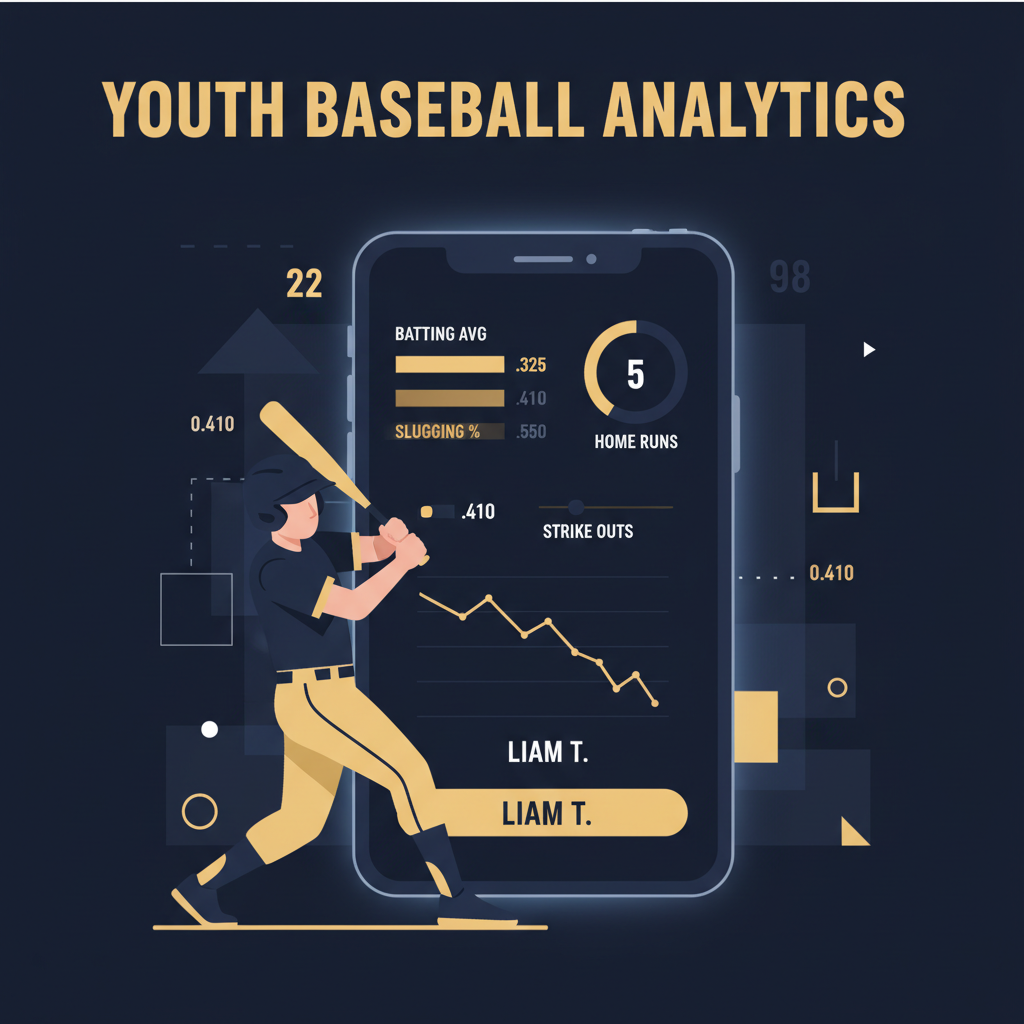
Youth Baseball Stats 101: What Metrics Actually Matter for House League Players
House League TeamFebruary 18, 2026 6 min read
Why Stats Matter (Even in House League)
Some coaches resist tracking stats in house league — afraid it creates pressure or discourages struggling players. But data, used correctly, is one of the most powerful development tools available. Stats show you what you can't see with the naked eye over the course of a season.
The Essential Stats to Track
Batting Average (BA)
Formula: Hits ÷ At-Bats
The most well-known stat. A batting average of .300 is excellent at any level. But BA alone has blind spots — it doesn't count walks.
When to use it: Compare players of the same age. Track trends over the season.
OBP is arguably more important than batting average in youth baseball, where walks are common. A player who draws 3 walks per game contributes enormously even with a low BA.
Slugging Percentage (SLG)
Formula: Total Bases ÷ At-Bats
Measures power. A single = 1 base, double = 2, triple = 3, HR = 4. Great for identifying players developing power.
RBIs and Runs Scored
Contextual stats — a great hitter with weak teammates will have low RBIs. Use these for celebration and motivation, not pure development assessment.
Strikeout Rate
The most telling development indicator at youth levels. A high K rate means the player isn't making contact. This should drive practice focus.
Non-Traditional Metrics Worth Tracking
Pitches Seen Per At-Bat
Players who see more pitches per AB are learning plate discipline — one of the hardest skills to teach. Track this even if your scoring app doesn't calculate it automatically.
Walk-to-Strikeout Ratio
A ratio above 0.5 (1 walk for every 2 strikeouts) shows improving patience.
Hard Contact Rate
Did the ball leave the infield? Did the player make solid contact even if the fielder made a great play? This is subjective but valuable.
How to Use Stats Without Creating Pressure
Share stats privately, not publicly on a leaderboard
Focus on trends, not single-game numbers
Celebrate improvement, not just ranking
Use stats in conversations, not confrontations
Tracking Stats Automatically
The easiest way to track these metrics is with a live scorekeeping app. Record each at-bat during the game — result, balls, strikes, RBI, stolen bases — and the stats calculate automatically. End-of-season reports become automatic too.
Conclusion
Stats don't make youth baseball less fun — they make it more meaningful. When a player sees their batting average improve from .220 to .310 over the season, that's a tangible story of development. Tell that story.
Ready to try House League?
The all-in-one baseball management platform for coaches and league admins.