Youth Baseball Field Positions Explained: A Guide for New Coaches
Understanding the Nine Positions
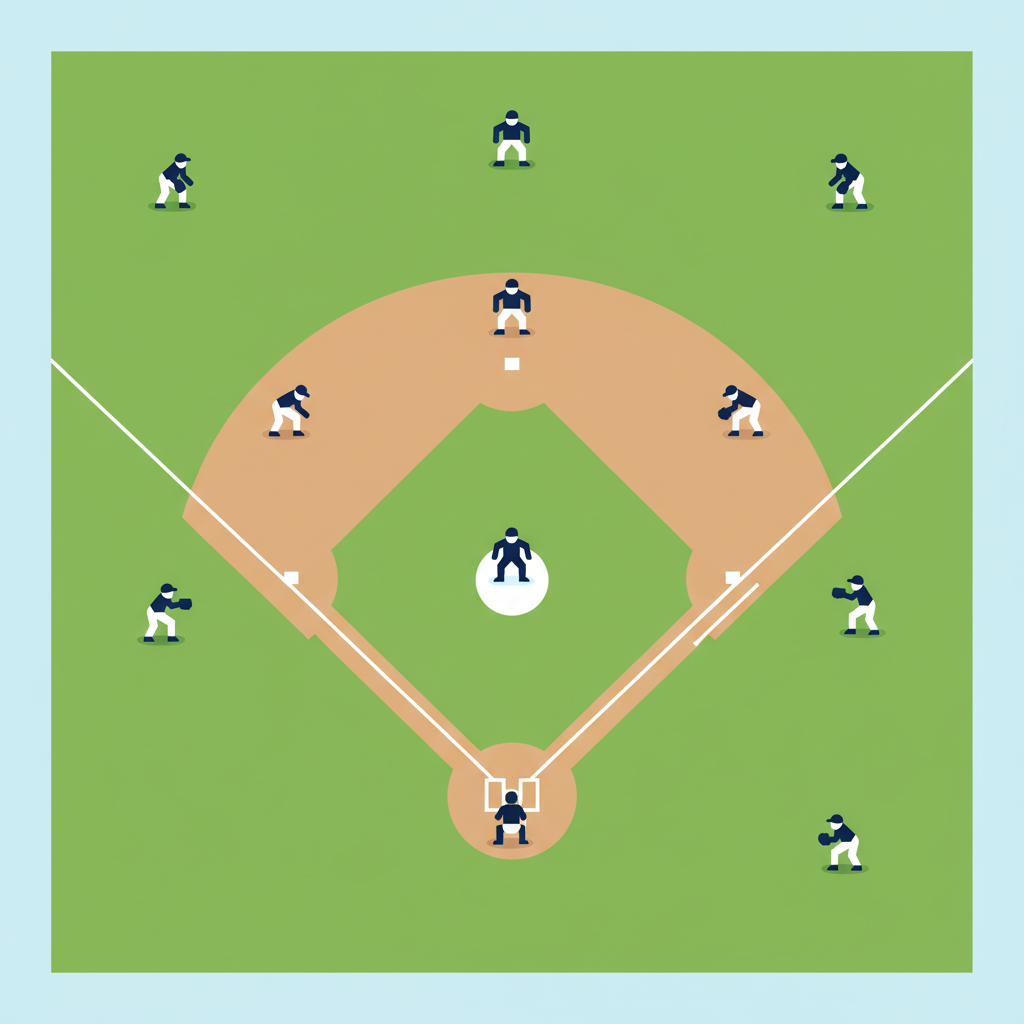
Baseball has 9 fielding positions, each with unique responsibilities and required skill sets. For house league coaches, the goal isn't to find the 'perfect' player for each spot — it's to develop every player across multiple positions over the season.
Pitcher (P)
What they do: Deliver the ball to the batter. The most influential defensive position.
Skills needed: Arm strength, accuracy, and mental composure. Pitchers must follow league pitch count rules.
House league approach: Rotate pitchers every 1–2 innings. Let every interested player try the mound at some point. Never overuse one arm.
Catcher (C)
What they do: Receive pitches, frame the strike zone, block wild pitches, and direct fielders.
Skills needed: Toughness, focus, strong arm for throws to second. Requires full gear.
House league approach: The gear can intimidate younger players. Introduce catching gradually. Never force a reluctant player into gear.
First Baseman (1B)
What they do: Receive throws from infielders, field balls hit near first base.
Skills needed: Footwork, good hands, left-handed players have an advantage here.
House league approach: An ideal spot for a developing player — lots of action, relatively forgiving on footwork mistakes.
Second Baseman (2B)
What they do: Cover the right side of the infield, turn double plays, receive throws.
Skills needed: Quick reflexes, good hands, ability to pivot.
Shortstop (SS)
What they do: Cover the left side of the infield between second and third. The most demanding infield position.
Skills needed: Range, arm strength, leadership. Often the best athlete on the team.
House league approach: Rotate multiple players through SS. Don't permanently assign your 'best player' here — others need the experience.
Third Baseman (3B)
What they do: Field hot grounders down the line, make long throws across the diamond.
Skills needed: Quick reactions, strong arm.
Outfield (LF, CF, RF)
What they do: Catch fly balls, field singles and doubles, relay throws to the infield.
Skills needed: Reads off the bat, communication with teammates, arm strength.
House league approach: Outfield is not a 'lesser' position. Develop communication habits early ('I got it!' calls). Center field requires the most range.
Extra Fielder (X)
Many youth leagues allow a 10th fielder in the outfield or a 4th outfielder. Use this position for the youngest or newest players while they get comfortable.
Building Your Fielding Rotation
Track every player's fielding history by inning and position. A good rule:
- Every player plays infield at least once per game
- No position repeated by the same player two consecutive innings
- Outfield is never used as 'punishment'
Modern apps track this automatically and warn you before you make assignments that violate your rules.
Conclusion
The beauty of house league baseball is that every player gets to experience every position. Take the time to teach position-specific skills at each spot, and your players will be better overall athletes by the end of the season.
Ready to try House League?
The all-in-one baseball management platform for coaches and league admins.