How to Run Youth Baseball Tryouts That Are Fair and Effective
House League TeamApril 21, 2026 6 min read
The Challenge of Youth Tryouts
Tryouts serve two purposes in house league: assigning players to balanced teams and identifying players who need extra support. Done well, they're efficient and fair. Done poorly, they traumatize kids and create parent controversies that last all season.
Before the Tryout: Preparation
Define what you're evaluating:
Throwing velocity and accuracy
Fielding ground balls and fly balls
Batting (tee, soft toss, or live BP depending on age)
Running speed (60-yard dash)
Baseball IQ (situational awareness)
Create a scoring rubric:
Using a 1–5 scale for each skill area prevents evaluator bias. Numeric scores are more defensible than 'he just looked better'.
Recruit neutral evaluators:
Coaches evaluating their own potential players is a conflict of interest. Use evaluators who are unbiased — league officials, experienced coaches from other divisions, or trained volunteers.
Running the Tryout
Station Format
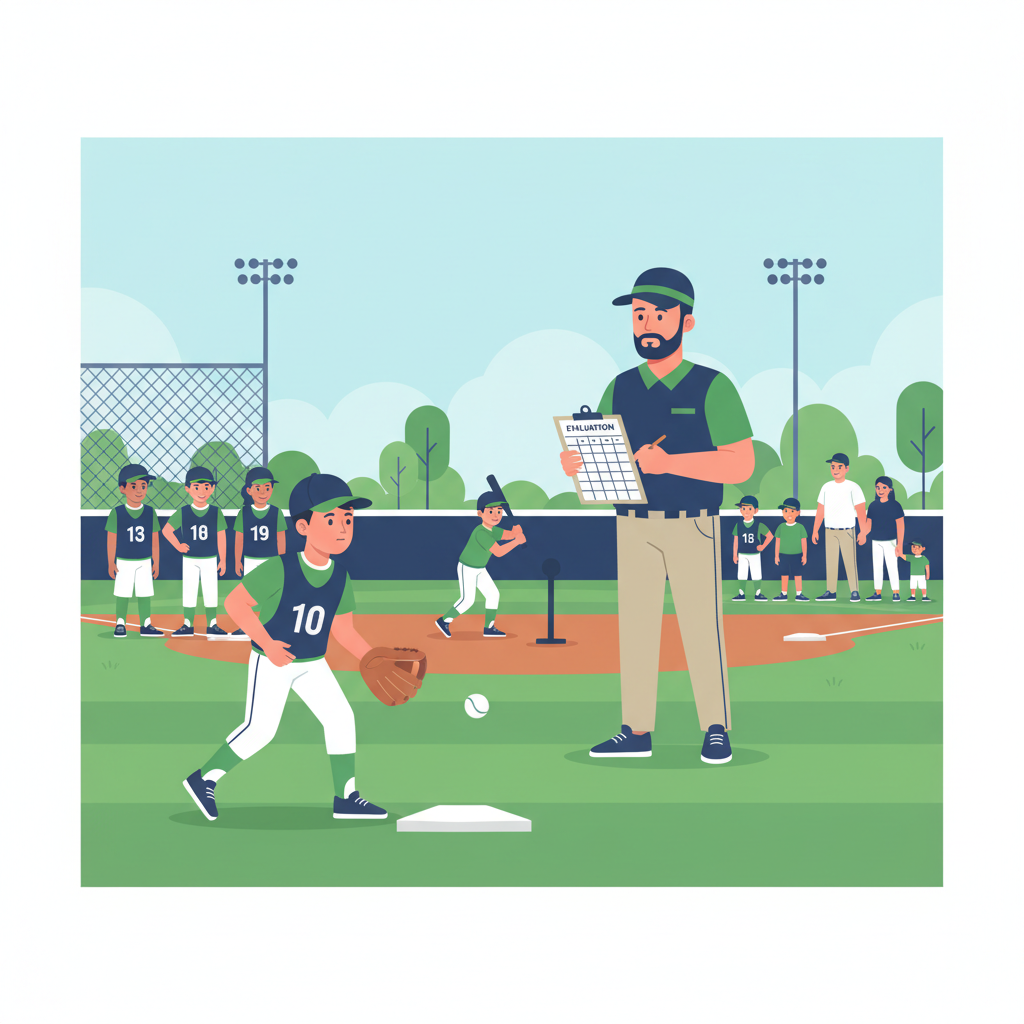
Rather than evaluating players one at a time in front of everyone, use stations:
Each station takes 3–4 minutes per player. You can evaluate 20 players in 90 minutes with 5 stations.
The Observation Mindset
Evaluate what you see, not what you expect based on name, parent, or past experience. Common biases to guard against:
Size bias: Big kids aren't always better
Confidence bias: Loud, confident kids get more attention
Social bias: Kids of coaches or board members get favorable treatment
Communicating Results
Never rank players publicly. Team assignments can be shared; full evaluation scores should not.
Communication best practices:
Notify families of team assignment within 48 hours
Offer a brief meeting for parents with questions
Frame assignments as 'best fit for this player's development' not a ranking
Balancing Teams After Tryouts
Once evaluations are scored, balance teams by:
Ranking all players by total score
Distributing top players evenly (snake draft order)
Verifying each team has positional coverage (at least 2 pitchers)
Checking geographic balance if relevant
Conclusion
Fair tryouts build trust with your entire community. When parents believe the process is objective and transparent, even families whose kids didn't 'score high' accept the outcome gracefully. That's the foundation of a healthy league culture.
Ready to try House League?
The all-in-one baseball management platform for coaches and league admins.