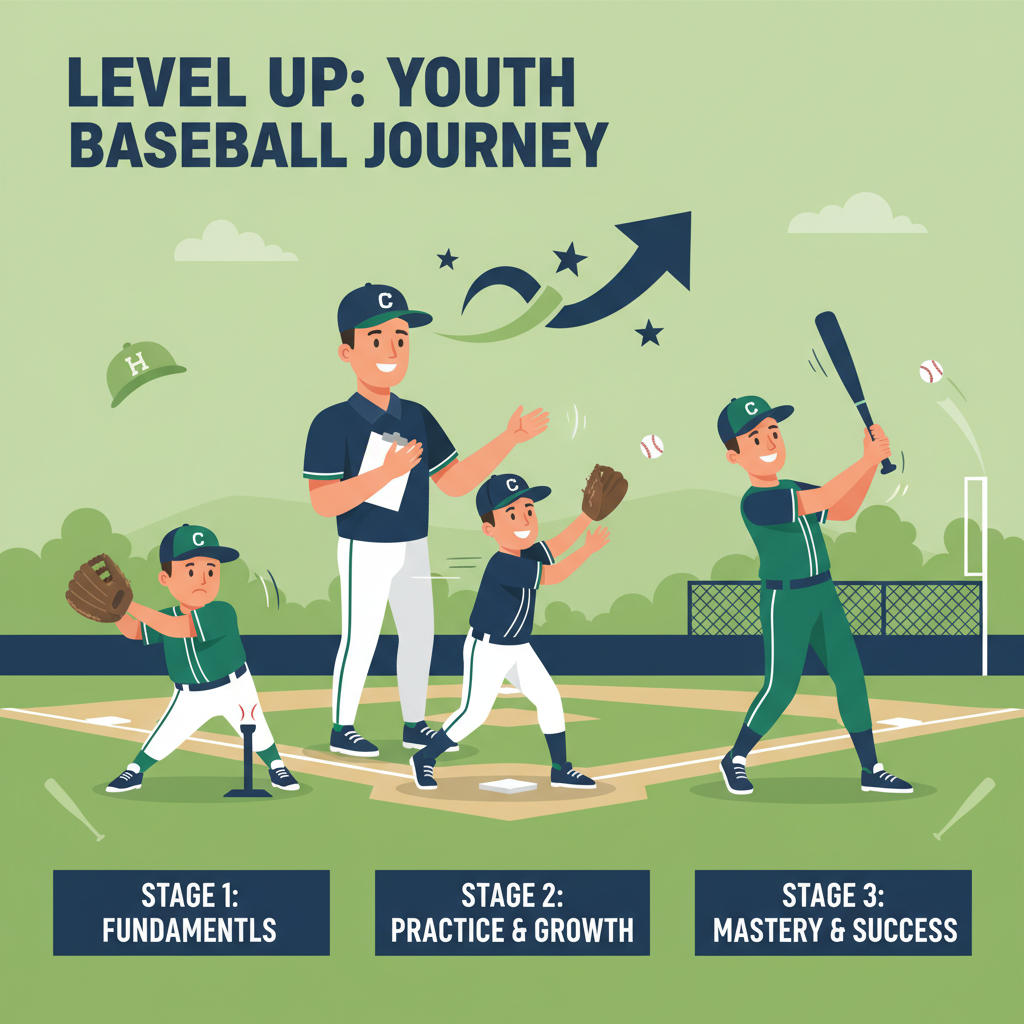
Building a Youth Baseball Development Plan for Every Player
House League TeamApril 14, 2026 7 min read
Why Every Player Needs a Development Plan
In house league baseball, coaches naturally spend more time with the players who are struggling or excelling. The middle of the roster — the majority of your players — often gets the least attention. A development plan ensures every player gets thoughtful coaching energy.
The Four Components of a Player Development Plan
1. Baseline Assessment
At the start of the season, rate each player on 1–5 scale across key skills:
Hitting: stance, swing mechanics, contact rate
Fielding: footwork, glove positioning, arm accuracy
Throwing: mechanics, velocity, accuracy
Baserunning: reads, speed, base decisions
Attitude: coachability, teamwork, effort
Keep these ratings private — they're a coaching tool, not a report card.
2. Season Goals
For each player, set 2–3 specific, observable goals:
'Improve strike zone awareness — draw at least 1 walk per game by mid-season'
'Master the footwork at first base — no more missed stretches by end of April'
'Increase batting average from .220 to .280 by season end'
Share these goals with players and parents at the start of the season. Kids perform better when they know what they're working toward.
3. Progress Tracking
Review each player's progress every 2–3 weeks:
Compare current ratings to baseline
Review stats for evidence of improvement
Note specific moments (a great defensive play, better plate discipline)
Adjust goals if needed (too easy or too hard)
4. Communication with Parents
Parents are your allies in development. Share:
One specific thing their child did well this week
One focus area for at-home practice
A reminder that development is non-linear — great weeks and rough patches are normal
Tools for Development Tracking
Modern coaching apps let you record assessments per player, track skill ratings over time, and generate development reports for parent conversations. The best ones show a visual timeline of improvement — powerful for both coaches and families.
The Assessment Conversation
When you sit down with a player (or parent) to review development:
Start with a genuine strength: 'Your fielding footwork has improved dramatically'
Share the data: 'Your batting average is up to .290 from .220'
Identify the focus: 'This month, we're going to work on your plate discipline'
Set the expectation: 'I'm going to give you specific feedback after every game'
Conclusion
Player development plans sound like a lot of work — and they are, initially. But once the system is in place, updates take 5 minutes per player per week. The payoff is enormous: players who feel seen and supported, parents who trust your coaching, and a team that improves visibly across the season.
Ready to try House League?
The all-in-one baseball management platform for coaches and league admins.