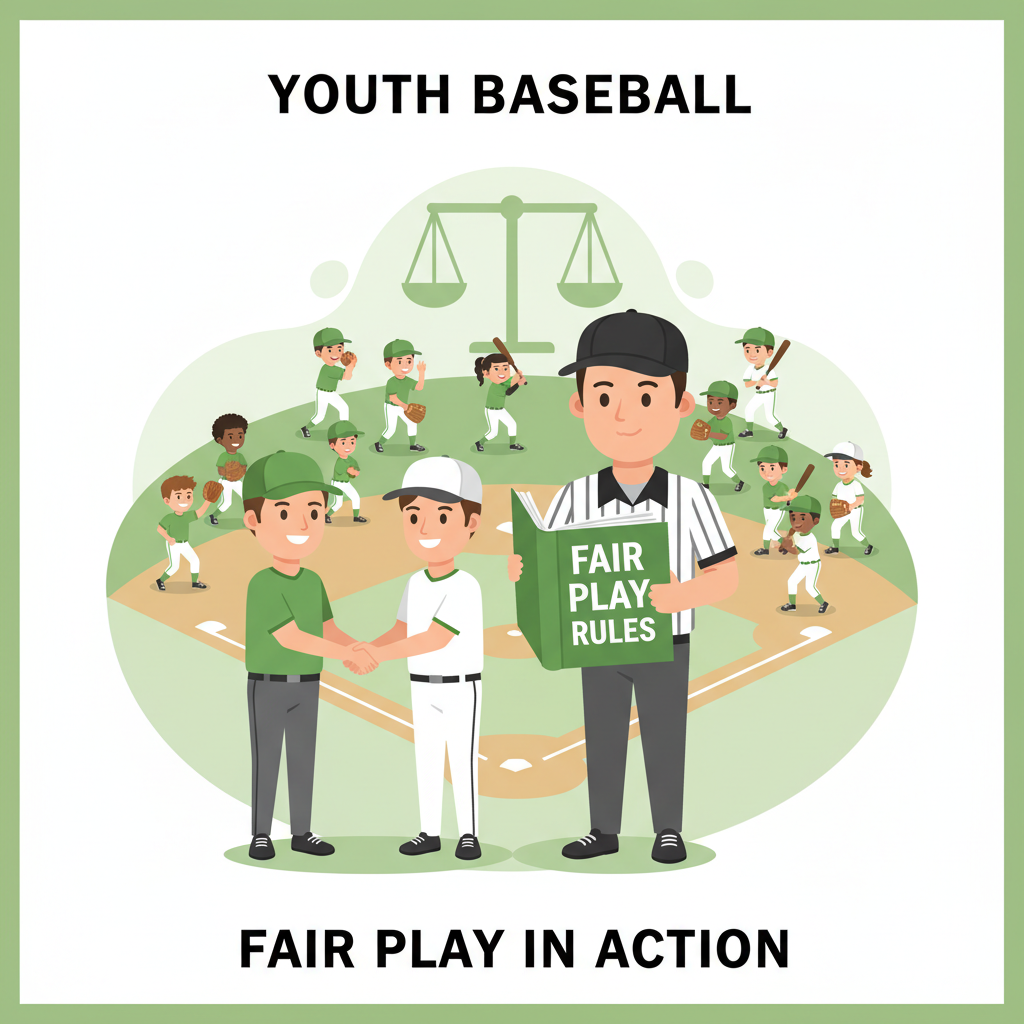
Fair Play Rules for Youth Baseball: A Complete Guide for House Leagues
House League TeamFebruary 1, 2026 8 min read
What Are Fair Play Rules?
Fair play rules are policies that ensure every player in a house league gets meaningful playing time, regardless of skill level. Unlike travel ball — where coaches play to win — house league is designed around player development and equal opportunity.
The Core Fair Play Rules Every League Should Have
1. Pitching Limits
The most important safety rule in youth baseball is controlling how much a young arm pitches. Little League International and most provincial/state organizations mandate:
7–8 year olds: 50 pitches/game
9–10 year olds: 75 pitches/game
11–12 year olds: 85 pitches/game
13–16 year olds: 95 pitches/game
Require mandatory rest days based on pitch count. A player who throws 66+ pitches needs 4 calendar days of rest before pitching again.
2. Fielding Rotation
Every player should experience every position over the course of a season. Common rules:
No player may play the same position two consecutive innings
Every player must play at least one inning in the infield per game
Pitchers and catchers count as premium positions — limit consecutive games
3. Bench Time Limits
No player sits more than 2 consecutive innings
Every player plays a minimum of 3 innings per game
If a game is shortened by weather, every player must have had a turn on the field
4. Batting Order Fairness
Continuous batting order (all players bat in rotation)
No player bats lower than 3 spots below their position last game
Every player bats in the top half of the order at least once per month
How to Enforce Fair Play Rules
Rules on paper are useless if they're not enforced. Best practices:
Pre-game check: Review your fielding plan before first pitch and flag any potential violations.
Digital tracking: Use a baseball management app that alerts you before you submit a lineup that violates rules. Warning (yellow) vs. hard stop (red) enforcement levels.
Override protocol: When an override is justified (injury, player request, disciplinary), document the reason. Good software logs this automatically.
Audit trail: League administrators should be able to review all lineup overrides at season end.
Why Fair Play Rules Matter
Research consistently shows that:
Players who get more playing time develop faster
Kids who feel benched are more likely to quit the sport
Fair play creates a more positive team culture
Parents are more engaged when they trust the process is fair
Conclusion
Fair play rules aren't a restriction on coaching — they're a framework for development. When every player knows the rules are being followed, trust increases. And when kids trust the process, they have more fun, work harder, and come back next season.
Ready to try House League?
The all-in-one baseball management platform for coaches and league admins.